
Running a Sex Offender Check in Newton County
The Texas Public Sex Offender Registry is the main public source for Newton County registry records. Texas DPS manages the database, while local police or the Newton County Sheriff receive registrations and verify information. The portal supports name, address or geographic, and higher-education search modes. A person who knows only a neighborhood can start with an address and map or list view. Someone checking a known name should include the most reliable spelling and review aliases when a profile supplies them.
No separate Newton County registry map, alert app, or sheriff registry list was verified. That gap makes the DPS search the first Newton County public channel. Local contact still matters when a record seems stale or a person may not be complying. Residents inside Newton city ordinarily register through the municipal police authority. People outside a municipality ordinarily register with the Newton County Sheriff unless a central registration authority has been designated. Call before visiting because no Newton County registration-counter schedule was published.
Newton County Registry Counters
The correct Newton County registration office depends on where the registrant lives. Newton is the county's only incorporated city. A Newton city address generally points to Newton Police, while an address elsewhere in Newton County generally points to the Newton County Sheriff. The public should not try to decide compliance from the map alone. Newton County officers can compare a report with information held in the official registration system.
Newton County Sheriff
110 E. Court Street
Newton, TX 75966
409-379-3636
Newton Police Department
City Hall, 101 W. North Street
Newton, TX 75966
409-379-5061
A caller can state the address at issue and ask which authority handles the registration. This keeps the report with the right Newton County agency and avoids needless contact with the person named in a profile.
Searching the Texas Public Sex Offender Registry
Start at the official DPS interface and choose the search mode that matches the facts already known. Use the county filter when the goal is a broad Newton County check. Use a name when identity is the main question. The live portal controls exact map-radius choices, so readers should rely on the options displayed during the search rather than assume a set distance.
- Open the Texas DPS registry and review its conditions of use.
- Choose name, address or geographic, or higher-education mode.
- Enter the known fields and select Newton County when that filter fits.
- Compare the result list, then open the relevant public profile and read its status and reporting agency.
| Field label | Type | Required | Use |
|---|---|---|---|
| Last, first, middle name | Text | Name mode | Try supported name or alias variants |
| Address | Text | Address mode | Enter the location as the portal accepts it |
| City | Text or selector | Address mode | Use Newton for the city search |
| ZIP code | Text | Optional | Use a five-digit ZIP to narrow results |
| County | Selector | Optional | Select Newton for a countywide view |
| Radius or distance | Selector | Address mode | Use only the live options shown |
| Institution | Selector or text | Higher-ed mode | Applies to the institution search |
Newton County Registry Addresses
A Newton County registry address is a reported data point. It is not a live tracking signal or a promise that the person is at that spot at the moment of a search. The profile may also show an address status and compliance status. Read those fields together. If the address and the status seem inconsistent, contact the reporting authority instead of drawing a conclusion from the map pin.
Texas Chapter 62 does not create one uniform statewide residential-distance ban for every registrant. A local ordinance or a term of supervision can impose a separate rule, but those sources must be checked on their own. Newton County readers should not infer a violation just because a mapped address appears near a park, school, or other place. The profile, the applicable court or supervision terms, and the local authority supply different pieces of the answer.
For a view of the official interface, the Texas DPS registry search shows how place and identity searches begin.
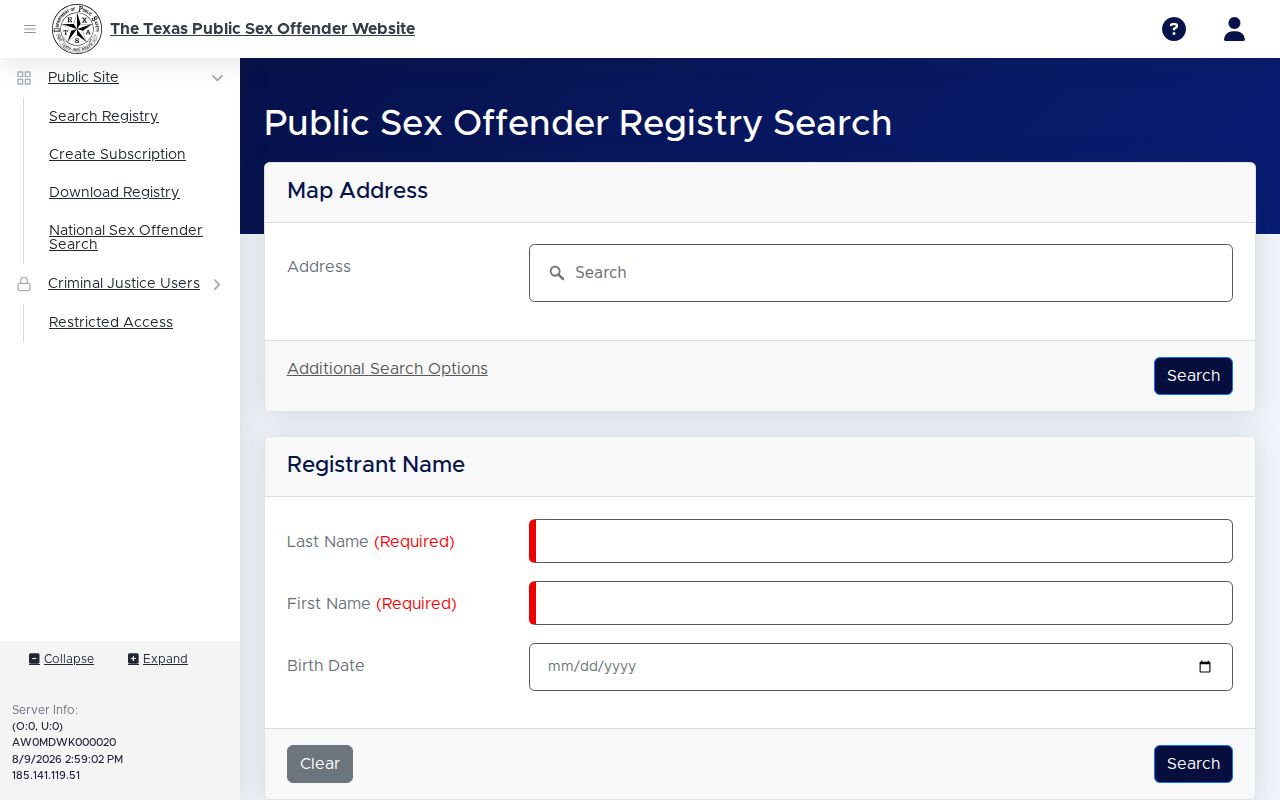
The search screen is a starting point, while the opened profile and its reporting-agency fields provide the context needed for a sound Newton County review.
What a Registry Profile Shows
A Newton County public profile can combine identity, appearance, address, offense, and registration facts. Texas law also removes sensitive material from public view. The goal is enough detail to distinguish records and support awareness without exposing victim identity or protected personal data.
| Name and aliases | The registered name and any aliases that DPS is authorized to display |
|---|---|
| Photo and description | A current photograph plus age or date display, sex, race, height, weight, hair, eyes, and marks when available |
| Reported address | The reported location, address status, and reporting agency |
| Offense details | Reportable offense, statute, conviction or adjudication date, and jurisdiction |
| Risk and duty | Numeric risk, registration duration, and verification or compliance status |
| Other public fields | Vehicle information and scars, marks, or tattoos when available |
Article 62.005 excludes victim identity, Social Security and driver's-license numbers, phone numbers, online identifiers, employer identity and contact details, and other information DPS designates. A missing field may therefore reflect a legal limit, not an incomplete search.
Match more than a name before treating a Newton County profile as the intended record. Compare aliases, the published photograph, descriptive details, offense jurisdiction, and reporting agency. Similar names can appear in a broad result list, while an old screenshot can miss a later status update. Return to the live DPS profile whenever current registration or compliance information matters.
Newton County Registry Across State Lines
Newton County sits on the Louisiana side of the Texas map, so a county filter can be too narrow for regional safety planning. The National Sex Offender Public Website operated by the U.S. Department of Justice queries participating jurisdictions. It adds a cross-state layer without replacing the agency that owns each underlying profile.
The official NSOPW interface illustrates that broader search path.
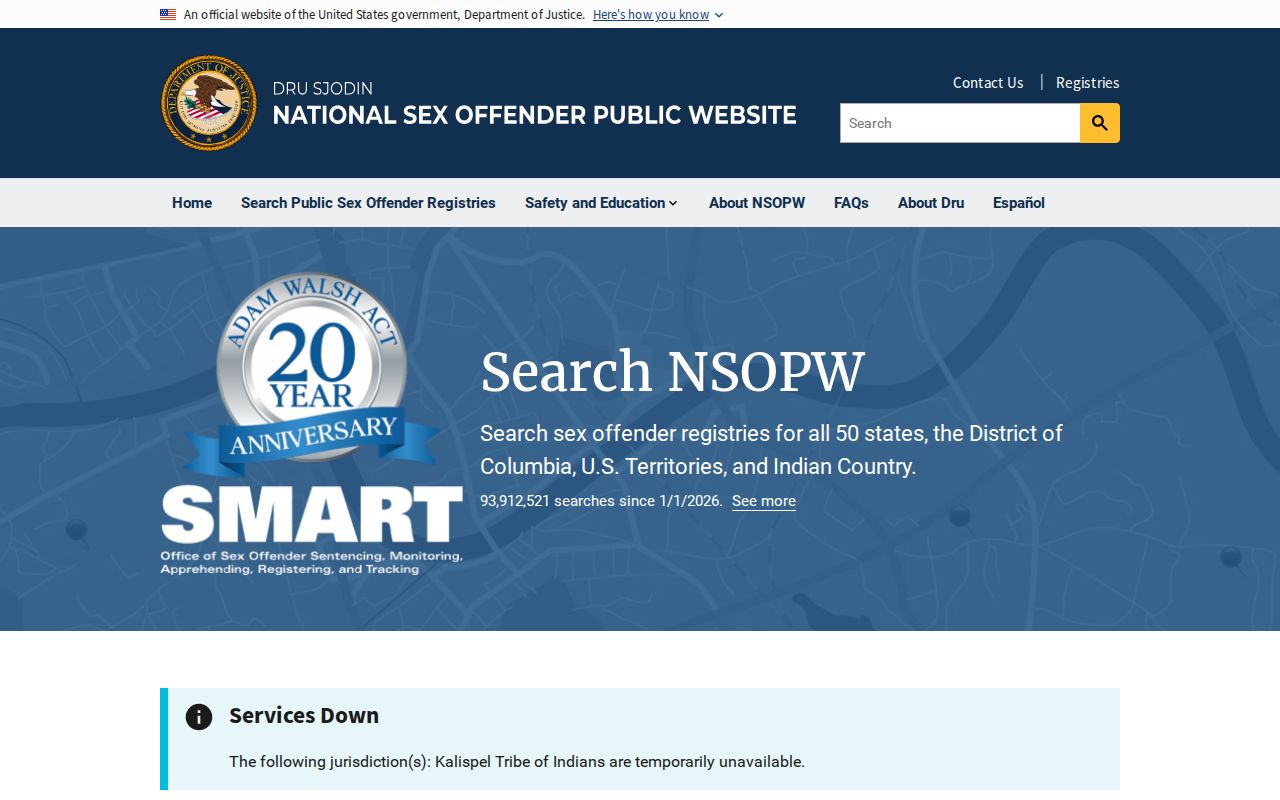
When NSOPW returns a Texas result, use the linked Texas record and the local reporting agency for the most direct source trail. A federated search can reveal records across jurisdictions, but it does not become a new custodian or fix a lag in a state profile.
Registration Requirements and Levels in Texas
Texas risk levels describe assessed danger. They do not set the registration term. Level 1 means low danger and a low likelihood of continued criminal sexual conduct. Level 2 indicates moderate danger and the possibility of continued conduct. Level 3 denotes serious danger and a likelihood of continued conduct. Duration instead turns on the reportable offense and the release, discharge, or completion event defined by law.
| Registration category | General duration | Verification |
|---|---|---|
| Adult lifetime-qualifying offense | Life | Ordinarily annual unless a higher frequency applies |
| Other adult reportable offense | Through the tenth anniversary after the later statutory event | Annual |
| Juvenile adjudication | Generally through the tenth anniversary after the later completion event, subject to orders | As required by the applicable rule |
| Two or more sexually violent offenses | Underlying term, often life | Every 90 days |
| Civilly committed sexually violent predator | Lifetime regime | Every 30 days |
The DPS registration program supplies official guidance for these duties.
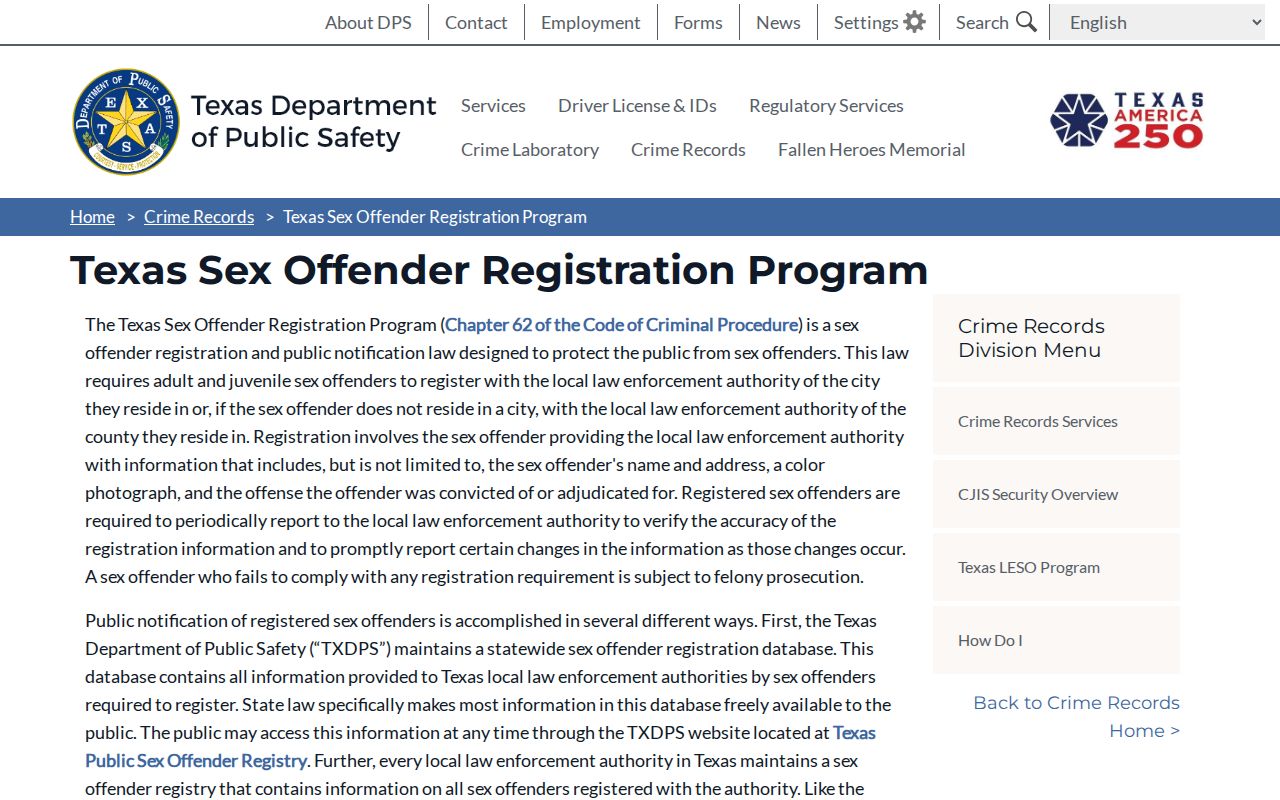
The program material helps separate a risk label from the offense-based duty and verification schedule that govern the actual Newton County record.
Newton County Registry Verification
Most adult registrants verify once each year, while specific categories report more often. Two or more sexually violent offenses can produce a 90-day cycle. A civilly committed sexually violent predator follows a 30-day cycle. These schedules explain why two Newton County profiles with the same risk level may display different reporting patterns.
Chapter 62 generally requires a person to register by the later of seven days after arrival or the first date local policy permits. It also sets duties tied to moves and changes. Failure to comply is a felony under Article 62.102. The public should report a suspected lapse, not try to investigate it. Newton Police or the Newton County Sheriff can route a local concern, and the DPS Sex Offender Registration Program can be reached at 512-424-2800.
Newton County Registry Noncompliance
Write down the Newton County public profile link, the listed reporting agency, the address or fact that appears inconsistent, and when it was observed. Then contact the agency with jurisdiction. Use Newton Police for a Newton city address and the sheriff as the starting point for an unincorporated Newton County address. Keep the report factual. Do not follow, confront, photograph, threaten, or contact the registrant or household.
If the local route is unclear, the Newton County department directory or DPS can identify the program channel. A report is not a finding of guilt or noncompliance. Law enforcement can compare the tip with nonpublic registration records, verification dates, and any move notice. That split protects safety while leaving enforcement to the office authorized to act.
Lawful Use and Community Notification
Newton County registry information supports personal, family, and community safety. It can inform a talk about boundaries, a route plan, or a decision to contact law enforcement about a concrete concern. It does not license harassment, threats, retaliation, discrimination, or vigilantism. The listed offense and duty should be read as official record fields, not as permission to interfere with a person or household.
Use registry data lawfully: Unauthorized obtaining, use, or disclosure of criminal history can be a crime under Texas Government Code Section 411.085. Never confront, threaten, or harass a registrant or household.
Community notification and the public database operate under Code of Criminal Procedure Chapter 62. Verify any safety-critical detail with the reporting authority. For broader county record context, the Newton County criminal history overview explains why one official system rarely answers every records question.